Vu lan 2025 - xe bus
👉 Mẫu đăng ký ở cuối trang này (link đã đóng) Tu viện Liên Tâm có
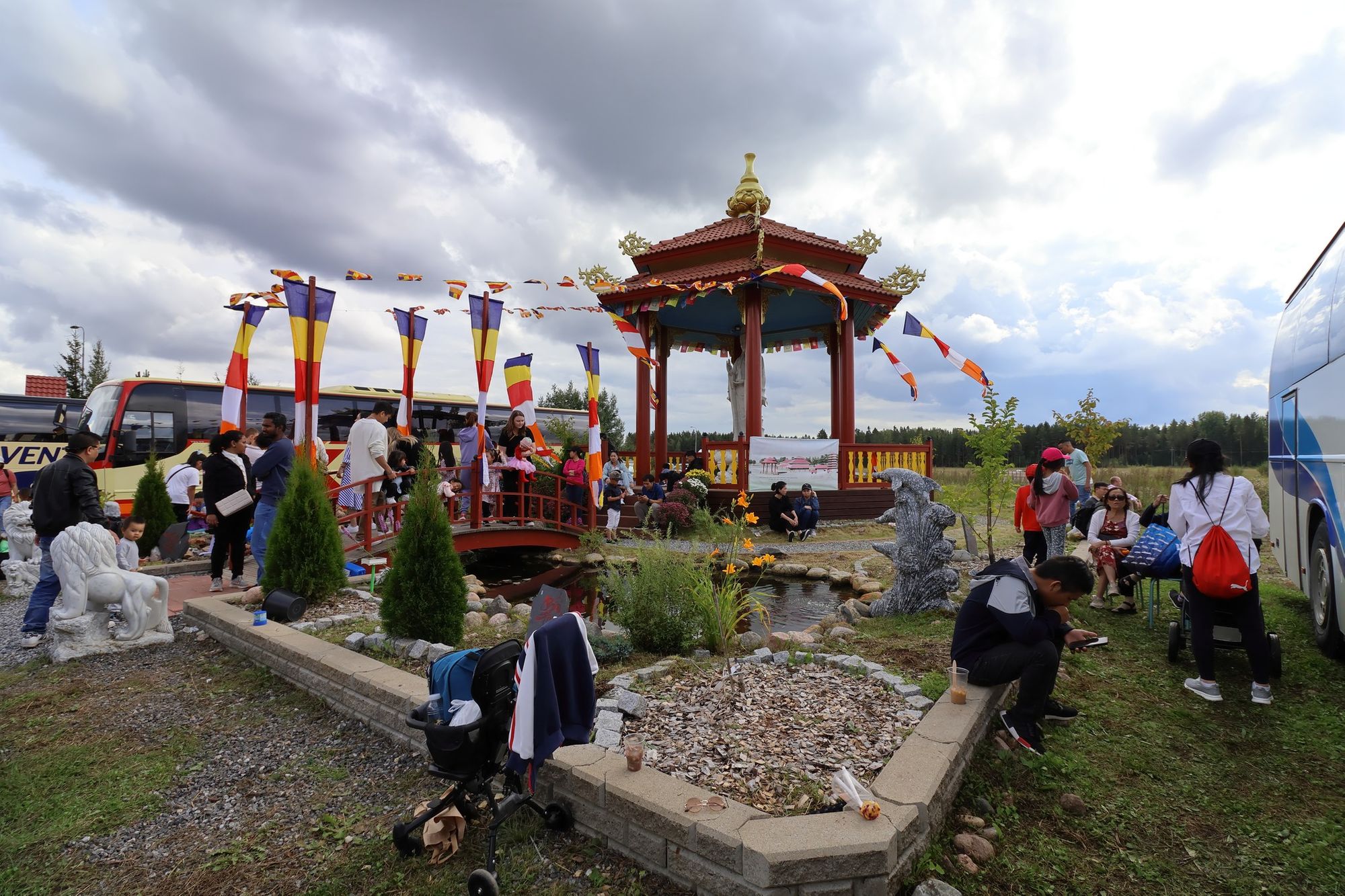
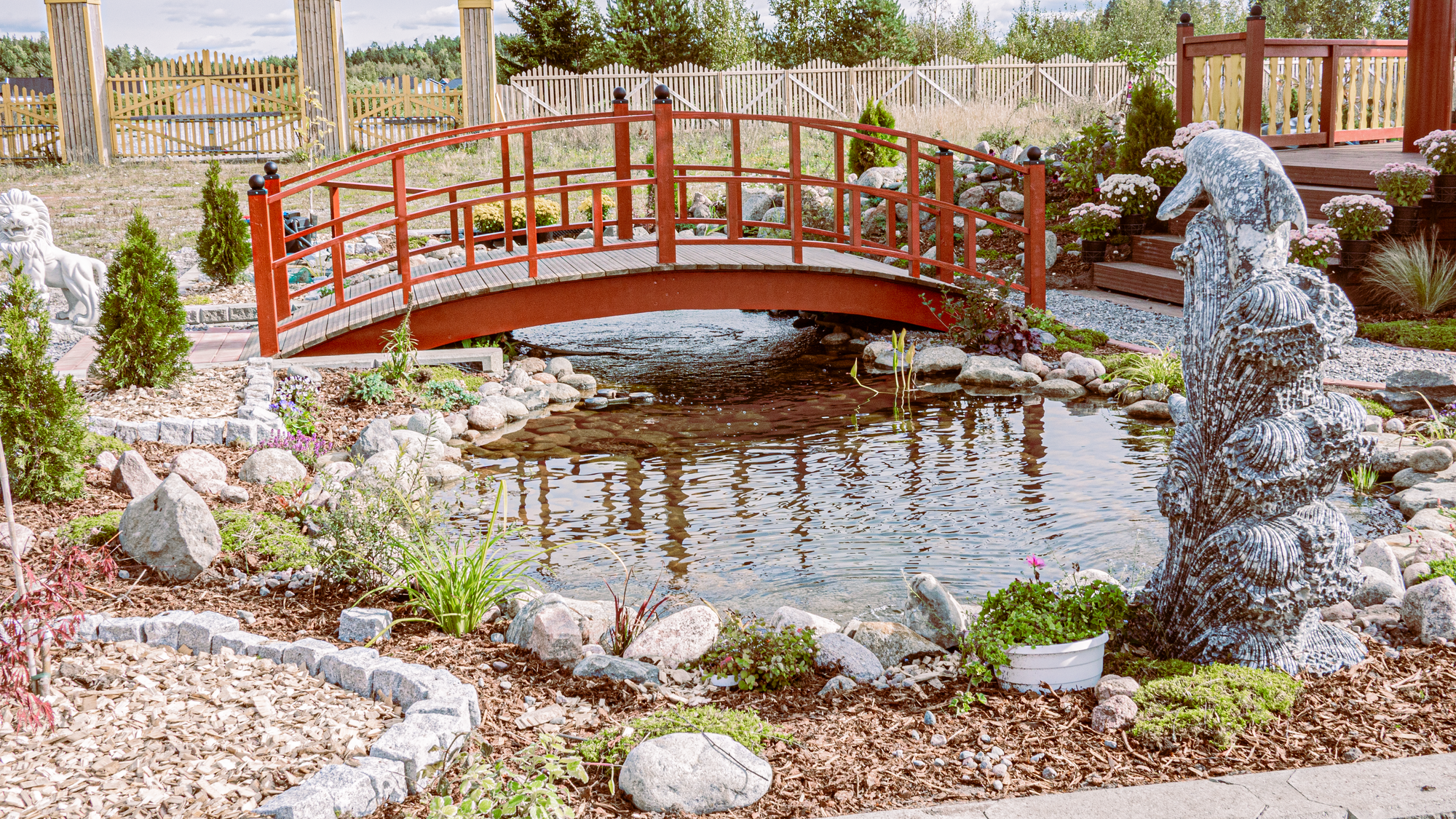
One of the most peaceful places at Liên Tâm Buddhist Monastery is Quan Âm Các — the Pavilion of Quan Âm Bodhisattva — together with the nearby koi pond and garden.
At the centre is a four-metre marble statue of Avalokiteśvara, or Quan Thế Âm Bodhisattva in Vietnamese.
At first, this may simply look like a beautiful place to walk, sit, take photographs, or watch the fish.
But each part of the space can also invite deeper reflection.
The image of Avalokiteśvara speaks of compassion.
The Bodhisattva path speaks of living for the benefit of others.
The koi remind us of patience and perseverance.
And the water can remind us of the nature of our own mind.
Quan Thế Âm Bồ Tát is the Vietnamese name for Avalokiteśvara, one of the most important bodhisattvas in Mahāyāna Buddhism.
Avalokiteśvara is especially associated with great compassion — the compassionate response to the suffering of living beings.
In Buddhist art, Avalokiteśvara has appeared in many different forms across Asia. In Vietnam and much of East Asia, Quan Thế Âm is very often represented in a gentle feminine form. The figure is also closely associated with the lotus.
The Vietnamese name Quan Thế Âm is traditionally understood in the sense of:
“One who perceives the sounds of the world.”
The idea is deeply connected with compassion.
To hear the world means more than hearing sounds with our ears.
It means being able to recognize suffering.
A child crying.
A person who is lonely.
Someone who is afraid.
An animal in distress.
A family experiencing difficulty.
Or even the suffering hidden behind another person's anger.
Quan Thế Âm represents the capacity to understand sentient beings' suffering and respond to it with compassion.
In Buddhism, compassion is not simply pity.
Compassion means recognizing suffering and developing the sincere wish to help relieve it.
Sometimes compassion means giving someone food.
Sometimes it means helping someone who is sick.
Sometimes it means forgiving.
Sometimes it means speaking.
Sometimes it means remaining silent and listening.
Sometimes the most compassionate action is simply to be fully present with another person.
To practise the spirit of Quan Âm is therefore to develop the ability to listen without immediately judging.
When someone speaks, can we listen before thinking about our reply?
When somebody behaves badly, can we ask what suffering may be behind that behaviour?
When we disagree with someone, can we still recognize that person as a human being who also wishes to be happy and free from suffering?
Compassion does not mean agreeing with everything.
It means refusing to lose our humanity when facing difficulty.

The word Bodhisattva is central to Mahāyāna Buddhism.
A bodhisattva is someone who develops the aspiration for awakening not only for themselves, but for the benefit of all sentient beings.
This aspiration is called bodhicitta — the mind or heart directed toward awakening.
The Bodhisattva path therefore brings together two qualities:
Wisdom — learning to see reality clearly.
Compassion — using that understanding for the benefit of others.
Mahāyāna traditions describe the Bodhisattva path through practices known as the pāramitās, or perfections.
A common list contains six:
They are not qualities reserved only for monks, nuns, or extraordinary saints.
They can be practised in ordinary life.
Generosity begins with learning to give.
We may give money or food, but generosity is much broader than material giving.
We can give our time.
We can give knowledge.
We can give encouragement.
We can give forgiveness.
We can give someone our full attention.
Sometimes simply listening patiently to another person is an act of generosity.
Compassion must appear in our behaviour.
We try not to harm living beings.
We try not to take what does not belong to us.
We try to use speech responsibly.
We become more aware of how our actions affect others.
Buddhist ethics therefore asks us not merely:
“What do I want to do?”
but also:
“What will my action cause?”
Patience does not mean passively accepting everything.
It means developing enough inner stability that anger and frustration do not immediately control us.
Sometimes we cannot change a difficult situation immediately.
But we can learn how we meet that situation.
Patience gives wisdom enough time to appear.
The Buddhist path requires steady effort.
A person does not become peaceful after meditating once.
Compassion does not become perfect after performing one kind action.
Our habits have developed over many years, so transforming them also takes time.
We continue.
We make mistakes.
We learn.
And we continue again.
Meditation helps us observe the mind more clearly.
Instead of immediately following every thought and emotion, we learn to recognize what is happening.
We become familiar with our own anger, fear, desire, kindness, and compassion.
Through awareness, we gradually gain greater freedom in how we respond.
Wisdom is seeing more clearly.
We begin to understand impermanence.
We see how strongly we become attached to things that constantly change.
We recognize how suffering can grow from ignorance, craving, and aversion.
And gradually, we learn to respond to life with greater understanding.
The Bodhisattva path therefore combines a compassionate heart with a clear mind.
Quan Âm represents this path in a particularly direct way.
It is easy to admire a beautiful statue of a Bodhisattva.
The more difficult question is:
Can we practise what the statue represents?
If we bow before Quan Âm but ignore someone who needs help, something is missing.
If we ask Quan Âm for compassion but refuse to forgive anyone, something is missing.
If we pray to be heard but never truly listen to another person, something is missing.
The image of Quan Âm therefore does not only invite devotion.
It invites transformation.
We may begin by asking Quan Âm for help.
Gradually, the practice also asks us to become a little more like Quan Âm ourselves:
That is the spirit of the Bodhisattva path.
Near Quan Âm Các is the monastery's koi pond, forming part of the peaceful garden landscape. Liên Tâm itself has referred to this area as its beautiful Zen garden with a koi pond.
Visitors often stop here simply to watch the fish.
That simple activity can itself become a form of meditation.
Watch one fish.
It moves.
It disappears.
Another appears.
Ripples form on the surface and then slowly disappear.
Nothing needs to be accomplished.
For a few moments, you can simply observe.
You can also help us by reminding children not to throw things at the fish.
It is useful to make an important distinction:
Koi are not uniquely Buddhist symbols.
Their symbolism comes more broadly from East Asian culture, especially the long tradition surrounding the carp.
An ancient Chinese legend tells of carp struggling upstream against strong currents and attempting to pass the Dragon Gate. A carp that succeeds transforms into a dragon.
Because of this story, carp became symbols of perseverance, strength of character, aspiration, and transformation. Museums preserving East Asian works describe the carp-and-Dragon-Gate motif in exactly this context.
This symbolism fits naturally beside a Buddhist place of practice.
A koi does not reach its destination by commanding the river to stop flowing.
It continues through the water.
It adjusts.
It moves around obstacles.
It keeps going.
Buddhist cultivation is similar.
There will be difficulties.
There will be distractions.
There will be periods when meditation feels peaceful and periods when the mind feels completely unsettled.
The important thing is not to expect a path without obstacles.
The important thing is to continue practising.
In this way, the koi can remind us of one of the Bodhisattva perfections:
perseverance.